Para ver este sitio en español, haga clic en la opción de idioma en la barra de menú. ¡Gracias!
Project #3
CAÑADA AGUA ESPINOZA
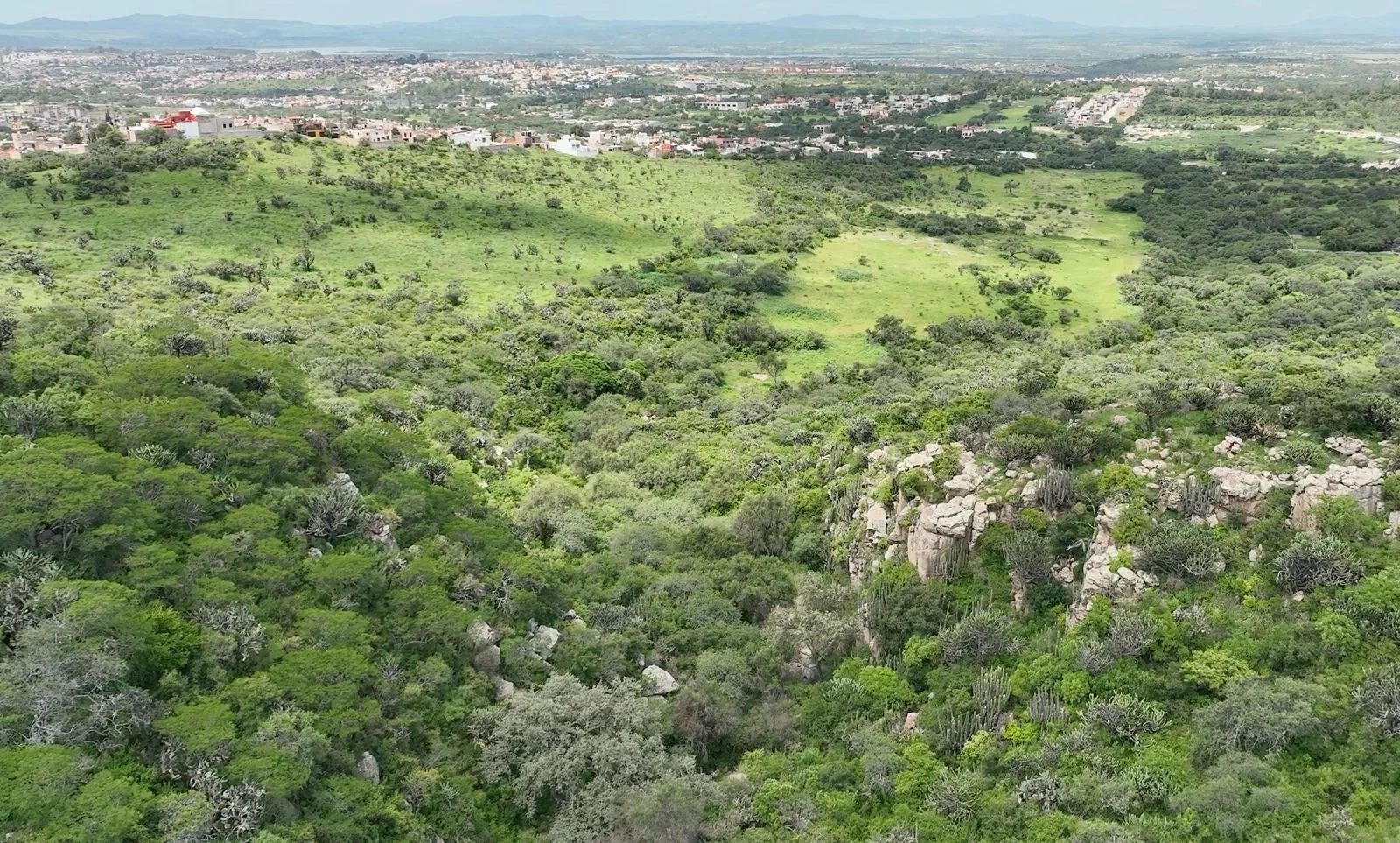
Preservation and Regeneration of the Cañada Agua Espinosa Watershed
In 2026, the Tikkun Institute began partnering with local families to protect and regenerate the Cañada Agua Espinosa watershed, the largest remaining native forest at the core of the SMA Municipality. It sits just above and to the Northeast of the city center. As a natural drainage and recharge zone, it has the capacity to capture, filter, and store water, while also sustaining biodiversity and wildlife habitat for many threatened species. However, without immediate intervention, this critical landscape risks crossing ecological thresholds beyond which recovery becomes significantly more difficult.
Vegetation loss has exposed soils to erosion, reducing their ability to absorb rainfall and increasing runoff. As a result, water that once infiltrated into the ground now flows rapidly across the surface, carrying away topsoil and further degrading the land. This has contributed directly to declining groundwater recharge, placing additional strain on already overexploited aquifers that supply San Miguel de Allende. The aim of this project is to reverse this process of deforestation and erosion in order to recharge water tables and renew this rare forest still filled with endagered flora and fauna, including lynx, and other mammals.
Today, habitat fragmentation has already reduced biodiversity, weakening the resilience of the ecosystem. Native plant and animal species are increasingly vulnerable, and the loss of ecological complexity further diminishes the land’s capacity to recover from climate stress. Without intervention, the watershed will continue to degrade, exacerbating water shortages and reducing resilience to climate change.
The crisis of the Cañada Agua Espinosa watershed reflects broader environmental trends across the region.
Decades of unsustainable land use have led to a steady decline in ecological function. San Miguel de Allende is facing an escalating water crisis drive by aquifer depletion, deforestation and land degradation, now exacerbated by the accelerating impacts of climate change. Rainfall patterns have become erratic, temperatures are rising, and the landscape is undergoing a slow but visible process of desertification. Seasonal streams are drying earlier each year, springs have diminished or disappeared, and soils once capable of retaining moisture are now compacted and eroded.
Within this fragile context, the Cañada represents both a critical ecological system and a profound opportunity.
The overarching goal of this project is to restore the ecological integrity, resilience and hydrological function of the Cañada Agua Espinosa watershed by increasing infiltration and reducing runoff, thereby recharging aquifers and revitalizing springs. It will regenerate native ecosystems through reforestation and habitat restoration, stabilizing soils and enhancing biodiversity.
Equally important, the project will engage local families as active stewards of the land, fostering long-term sustainability through education, participation, and shared responsibility.
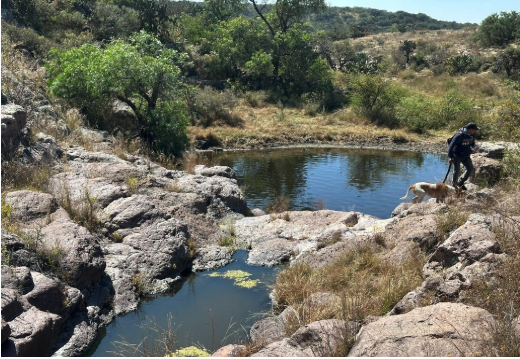
Project Approach and Activities
At the core of the project is watershed restoration, which will involve the installation of natural infrastructure such as check dams, terraces, and infiltration systems. These interventions are designed to slow water flow, increase soil absorption, and rebuild the hydrological function of the land. Degraded slopes will be rehabilitated, and key recharge zones will be protected to maximize their capacity to capture and retain water.
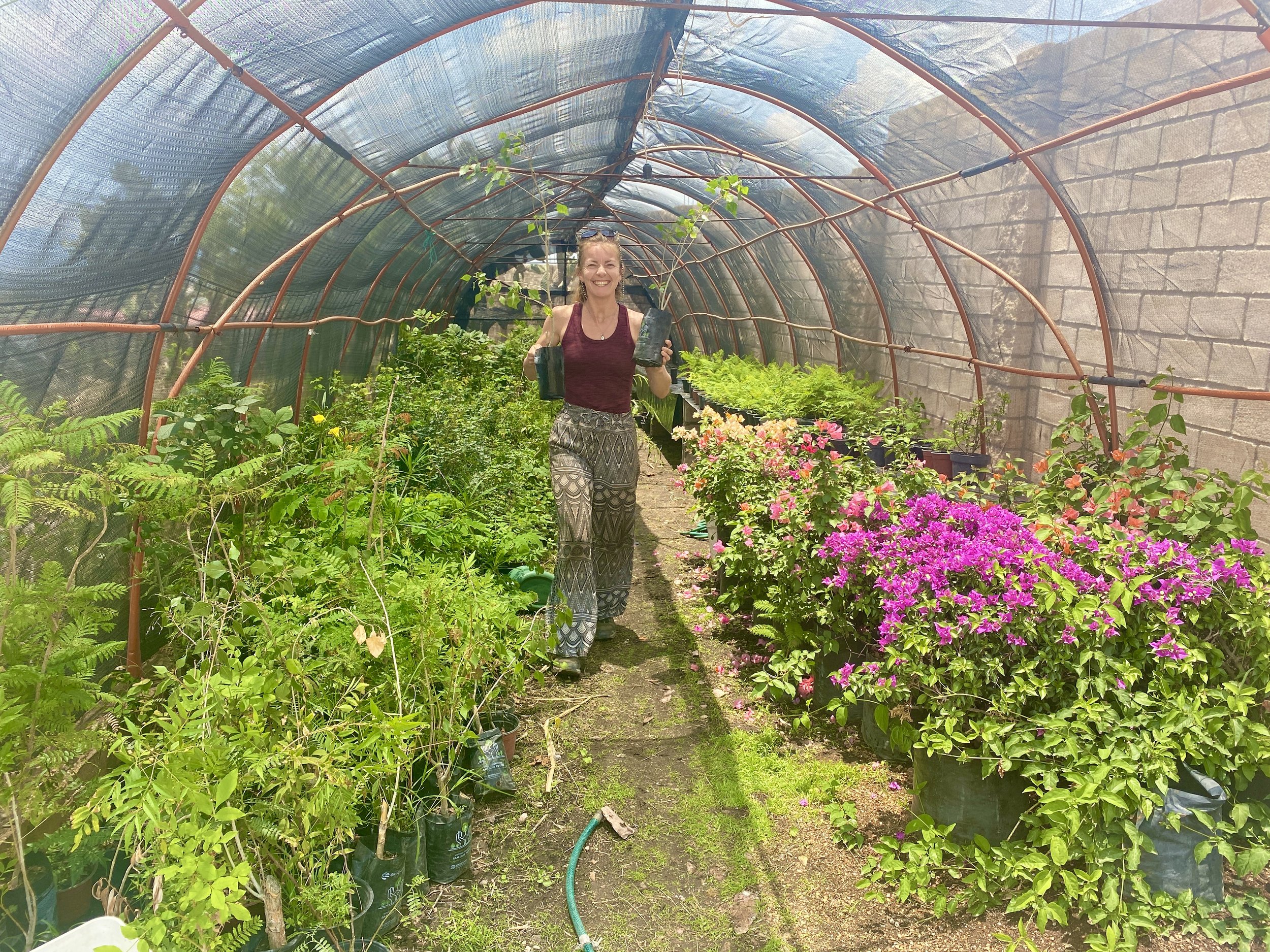
Complementing this work is a comprehensive reforestation and habitat restoration program. Native plant species will be propagated and reintroduced, restoring vegetation cover and creating conditions for the return of wildlife. Community nurseries will play a central role in this effort, providing both plant material and opportunities for local involvement. Over time, these efforts will contribute to the formation of ecological corridors that enhance connectivity and resilience.
Scientific research and monitoring will guide all interventions, ensuring that restoration efforts are adaptive, evidence-based, and responsive to changing environmental conditions. Scientific assessment of the canyon watershed health, including hydrology, flora and fauna, will be under the direction of the scientific team of Arboceta Mexicana, led by Dra. Rosario Torrones and the Center for Ecological Sustainability of San Miguel de Allende.
Our work will include hydrological assessments, biodiversity surveys, and soil health analysis. This data will inform decision-making and allow for continuous refinement of restoration strategies. The Cañada is already being made available to professional student internships in related scientific studies.
Equally critical is the emphasis on community education and participation. Through workshops, training programs, and outreach initiatives, local residents will gain the knowledge and tools needed to care for the watershed. This aligns with the organization’s commitment to environmental education and community engagement as essential components of conservation .
Finally, the project will establish long-term conservation agreements with landowners and stakeholders, ensuring that restored areas are protected and managed sustainably over time. These agreements will create a framework for shared stewardship and lasting impact.
The project will be implemented over multiple phases, beginning with a period of assessment and planning, followed by pilot interventions and gradual expansion across the watershed. Early efforts will focus on establishing baseline data and building relationships with stakeholders. Subsequent phases will scale up restoration activities, with long-term monitoring and adaptive management ensuring sustainability beyond the initial project period.
PROJECT TIMELINE
Spring and Summer 2026:
Scientific assessment of the canyon watershed health, including hydrology, flora and fauna, under the direction of the Scientific team of Arboceta Mexicana, led by Dra. Rosario Torrones, Professor of native plant sciences.
Assessing the reforestation potential of the watershed within and around the Cañada. Selecting critical areas to regenerate through infrastructure such as check dams, terraces, plus infiltration systems such as keyline swales and berms, and other remediations of soil erosion and water run-off.
Selecting key native species of grasses, cacti, bushes and trees based scientifically on existing species and ecosystem evaluation.
Begin propagation of specific species for reforestation.
Summer and Autumn, 2026:
Building stone walls, water canals, swales and berms. Restoring reservoir and inflow canal maintenance . Building cisterns for irrigation and tree maintenance. Installing irrigation lines andvalves. Building check dam.
Spring 2027: Begin reforestation
Help us restore water and food security and ensure climate change resilience in San Miguel.